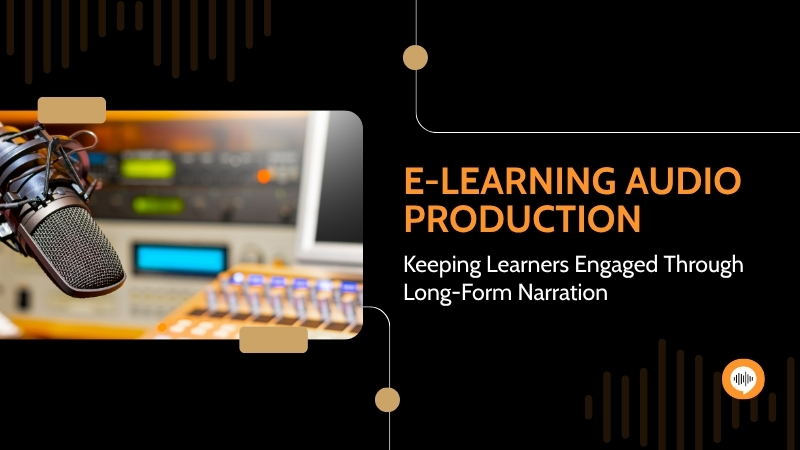
E-Learning Audio Production: Keeping Learners Engaged Through Long-Form Narration
Picture a learner at 3pm on a Thursday, three modules into compliance training, listening to a narrator who sounds like they’re reading the terms and conditions. Their eyes are on the screen. Their mind is on lunch, or tomorrow, or anything else.
That’s the quiet risk in even a well-designed course: learners drift when narration feels flat, repetitive or hard to follow. This matters most in corporate training, technical courses and longer modules, where people spend a long time with the same voice.
A good e-learning voiceover does more than read the script. Pacing, emphasis, tone and natural delivery help learners follow the content and stay with it. That makes voice selection part of the learning design, not just the final production step.
TL;DR
- Long-form narration needs natural delivery, sensible pacing and tonal variation, not just clear pronunciation
- A monotonous voice can sink even well-designed material
- Match the narrator to your subject, audience and course format
- Scripts, visuals and narration should work together, not compete
Professional casting gives you consistent, engaging audio at scale
What is an e-learning voiceover?
An e-learning voiceover is recorded narration used in online courses, corporate training modules, instructional videos and digital learning materials. It explains concepts, guides learners through activities and reinforces key information.
A professional narrator makes lessons easier to follow through clear pronunciation, appropriate pacing and natural emphasis. The voice should suit the subject, whether that’s technical training, employee onboarding, or educational content for students.
Research insight: A 2020 study in Information and Learning Sciences found that learners who heard an enthusiastic narrator performed better on transfer tests than those who heard a calm one. Vocal delivery, it seems, can shape how learners engage with and apply information.
How does voiceover affect learner engagement?
A narrator’s voice shapes how learners experience and understand information. That doesn’t mean every course needs an energetic voice; the right delivery depends on your subject, audience and learning objectives. Three things matter most.
- Natural delivery. Learners shouldn’t feel they’re listening to a document being read aloud. Natural phrasing, sensible pauses and a conversational style make complex information easier to take in.
- Vocal variation. Narrators don’t need to sound animated in every sentence, but subtle shifts in emphasis, pitch and pace separate key points from supporting detail. Without them, long recordings become hard to follow.
- Consistent pacing. Fast narration overwhelms learners meeting unfamiliar terms, while painfully slow delivery makes familiar material tedious. The right pace depends on the audience’s existing knowledge and the complexity of the content.
How can you keep learners engaged during long-form narration?
A good voice artist is only part of the equation. Script quality, course structure and audio delivery all play a role.
Break long modules into manageable sections. Give each section a clear focus so learners can work through the material progressively and pause before moving on. Research on multimedia learning supports learner-paced segments over one continuous presentation.
Write for the ear, not just the screen. Use clear, conversational language. Shorten long sentences, explain technical terms, and read the script aloud to catch awkward phrasing.
Match the voice to the subject. Technical training may need a measured, precise tone, while leadership courses may suit a more conversational approach.
Use pauses effectively. A brief pause after an important point gives learners time to absorb it. Line pauses with key explanations, visuals, and activities.
Keep narration and visuals in sync. Narration should complement what’s on screen, not simply read every word. Use audio to explain concepts, clarify details and guide learners through the material.
How do you choose the right voice artist for corporate training?
Choosing a narrator involves more than finding a pleasant voice. Consider these five factors:
- Subject familiarity: Can the artist handle the terminology and pronunciation?
- Tone: Does the delivery suit the course, whether formal, conversational or instructional?
- Clarity: Are the words easy to understand at the intended playback speed?
- Consistency: Can the artist keep the same delivery across modules and sessions?
- Technical quality: Can the recording meet your audio specifications without avoidable noise or distortion?
Ask for samples that resemble your actual course rather than relying on general demo reels. For several hours of narration, ask shortlisted artists to record a representative passage. If the course will be updated regularly, think about how easily new modules can be recorded in a consistent style.
Why audio quality matters in e-learning
Poor audio distracts learners, especially in longer sessions. Background noise, room echo, uneven volume and abrupt edits all make content harder to follow. Before recording, confirm the file format, sample rate, delivery schedule, and editing requirements with the artist.
Also Read: Why Flawless Audio Quality Is Now a Non-Negotiable for Global Brands
Accessibility matters too. The W3C recommends captions for prerecorded video with audio under WCAG 1.2.2, subject to its exceptions, and transcripts offer another way to access and review the content.
Find the right voice for your e-learning project
The narrator you choose becomes part of the learner’s experience. The right voice makes detailed explanations easier to follow, gives a course a consistent identity, and helps the content sound right for its audience.
Looking for a voice for your next e-learning project?
Start with the experience you want your learners to have. Once you’ve defined the tone, audience and delivery style, finding the right artist gets much easier. The Voice Finder connects you with professional voice artists, so you can compare samples against your course requirements and build your shortlist with confidence.
I cut the list of vocal qualities and the corporate training/multi-module examples, leaving the core message and the call to action. The “finding the right artist” link is still in place, and you may want to link “The Voice Finder” in the third sentence.
Frequently Asked Questions
What makes a good e-learning narrator?
Clear delivery, appropriate pacing and a tone that adapts to the subject and audience.
Should e-learning voiceovers sound conversational?
Often, yes. It makes explanations more approachable, but the delivery should suit the subject. Compliance and technical training may need a more measured tone.
How long should an e-learning voiceover be?
There’s no universal ideal. Structure the narration around learning objectives and divide lengthy material into manageable sections.
 Why Creative Directors Are Rethinking Mass Au...